
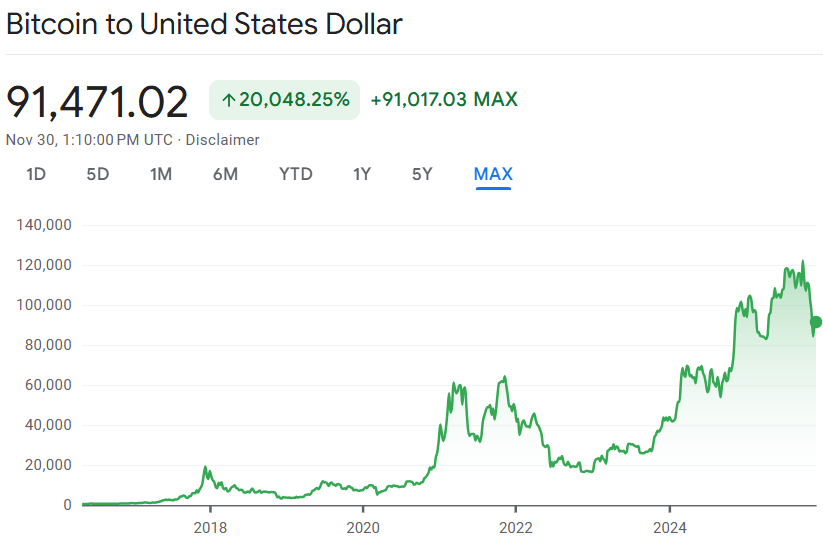
Bitcoin holds steady around $91,000 after a brutal November drop from its $126,000 October peak, marking the crypto’s second-worst month of 2025 with over 17% losses. As of November 30, BTC/USD trades at about $90,841, up slightly amid Fed rate-cut optimism and ETF inflows. Bitwise’s André Dragosch calls this a prime “asymmetric risk-reward” setup, with recession fears already baked in.
The Sharp Correction Unpacked
November saw Bitcoin plunge as low as $82,605, wiping out 28% from highs due to sticky inflation, leveraged liquidations, and macro jitters. Yet stabilization above $90,000 reflects thinning sell pressure post-Thanksgiving, with weekly gains nearing 8%. Spot Bitcoin ETFs snapped a four-week outflow streak, pulling in $71 million on November 29—now holding 6.5% of supply for tighter liquidity.
What Experts Are Saying
André Dragosch from Bitwise Europe frames Bitcoin as pricing in the bearishest global growth outlook since COVID and FTX, despite rising ISM and Philly Fed signals. This mismatch creates upside potential if recession dodges materialize, with targets at $97,000–$100,000 on breaks above $93,000. Pro-crypto shifts under President Trump add tailwinds, though inflation data looms large.
Key Levels to Watch
- Support: $90,000–$88,000 holds firm; drop below eyes $75,000 in stress tests.
- Resistance: $93,000 (yearly open), then $97K–$100K rally zone.
- Catalysts: ETF flows, U.S. jobs data, and rate signals could ignite rebound.
Bitcoin’s resilience shines through corrections—strategic dips like this suit long-term investors. What’s your take? Share below, subscribe for daily updates, and check related posts on ETF trends. Stay ahead at timesofinvesting.com.





Leave a comment